通用汽车2027款凯迪拉克Lyriq将搭载AI助手,车企为何执着让用户与车对话
Automakers Really Want You To Have A Conversation With Your Car
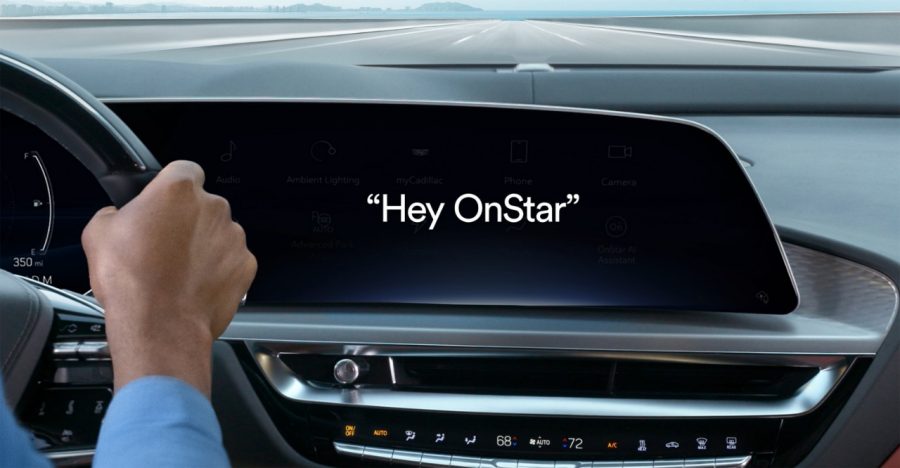
通用汽车计划在2027款凯迪拉克Lyriq上推出AI Assistant,结合车辆上下文与通用知识提供个性化协助,复杂问题可转接OnStar顾问。CEO Mary Barra称要把车变成"智能伙伴",SuperCruise将在数年内迭代至免眼驾驶。文章质疑普通消费者是否真需要会对话的车,认为多数需求用手机即可满足。
Nearly every presentation for a new car I attend involves an executive talking to their car, and their car talking back to them. There’s this idea that, as cars become more software-defined, we’ll want them to do more things in our lives, which will make us want them to become even more software-defined. Maybe. Maybe not.
The Morning Dump today will focus on disruption, both of the external and internal kind. General Motors is hoping to use AI tools to both positive disrupt their own and AI tools to maybe un-disrupt the driving experience. That could work. Volkswagen assumed it would sell a bunch of EVs, then assumed it wouldn’t, and now is selling a lot more EVs. That’s a problem.
Bosch is realizing that its parts business is in trouble due to Chinese competition, so it’s breaking out that part of the company. That’s like Ben & Jerry’s getting rid of the part of the business that makes Chunky Monkey! You know what would be a great band name? Japanese Hot Roller. I mention this, because U.S. Steel is getting a new Japanese hot roller.
The Conundrum Of Talking To Your Car
It’s dangerous to quote The West Wing in late October of an even-numbered year, but Martin Sheen as President Bartlett tells an amusing parable that’s worth repeating here (This is in the Season 4 two-part opener, which is the best two episode run the show has, though I can’t really watch it anymore).
Here it is, so you don’t have to go back and try to find it:
“You know the story about the guy whose car gets stuck in a muddy hole. A farmer comes along and says he’ll pull the car out of the mud, but he’s going to have to charge 50 bucks ’cause this is the tenth time he’s had to pull it out of the mud today. The driver says, “God, when do you have time to plow your land, at night?” The farmer says, “No, no. Nighttime is when I fill the hole with water.”
It works for many concepts in modern life, and I think software-defined vehicles is one of them. There’s a presumption that we, as consumers, want our cars to do everything for us. We want them to order our dry-cleaning, find us a fun restaurant, and be our own little personal digital assistant. I use a digital assistant to sort through my ish because otherwise it would be overwhelming, but do I want that to be my car?
I was struck by something Car & Driver Executive Editor and noted smart person Mike Austin wrote:
Meanwhile all most people want out of a car is the core thing it solves: being able to participate in a car-dependent society. Does anyone really want a mobile smart assistant that requires a recurring subscription and other shit that won’t work or will somehow break?
That’s kind of how I feel about this. I do want a device to do this and, as ever, I want that device to be my phone. The degree to which my car can interact with my phone–a la CarPlay or Android Auto–sort of depends on which car it is. This isn’t an enthusiast-based rant, because obviously there are going to be plenty of old cars that we can drive without help, and most of us drive those cars to get away from digital assistants. I just wonder the degree to which normal people want this.
All of this is coming up because GM did a big talk in Manhattan yesterday and went on about how the company wanted to be a technology company, which is a thing companies love to say and never quite seem to pull off (well, when Nokia went from trees to phones, but that was temporary). Some of the initiatives make sense, like using technology to speed up the development process of new cars. SuperCruise is the best hands-free driving tech I’ve used, and the company will continue to iterate on it so that it offers eyes-free driving in a couple of years.
Then there was this, via the Freep:
“We’re changing what it means to drive and changing your car into an intelligent partner that makes your life easier,” CEO Mary Barra said onstage. “All of these developments will be building us the car of the future.”
Hmm..
GM has more on its press site about what this means:
The AI Assistant is built around your vehicle, your context, and authoritative GM knowledge. It combines conversation with vehicle understanding to deliver personalized assistance and deeper insights, all guided by your permissions and privacy controls. This integration enables support tailored to your vehicle and allows the Assistant to complete complex tasks that general-purpose assistants cannot.
When a question calls for human assistance, OnStar AI Assistant can connect you with an OnStar Advisor. It combines AI’s ability to understand and reason with the reassurance of live support, all in one place.
This will get rolled out on the 2027 Cadillac Lyriq, which is a vehicle I like very much, so perhaps I’ll find it useful. I do like when a car can make some simple adjustments with voice, though the fact that it can “Make adjustments without reaching for a screen” and one of the examples they give is “open the glove box” does irk me.
So much of what a car can do is beyond what most people seem to want, and there’s such a disinterest in adding buttons back, that of course they need voice assistants to make the car simply work now. How much of this is really demand, and how much of this is just us paying automakers to empty a hole they’ve been filling with water every night remains to be seen.
VW’s New Problem Is Selling Too Many EVs

I’ve heard nothing but good things about the new Volkswagen ID.Polo, which seems exactly right for a European EV. Buyers seem to agree, and there’s a 12-month-ish long waiting list for that, as well as the Škoda and Cupra versions.
This, though, is a problem for VW, as Manager Magazin reports:
The electrifying figures have a dangerous catch: Electric cars, especially the smaller ones, are hardly profitable. “This will further dilute our margins,” says a powerful figure within the company. Another estimates that the new electric euphoria could cost Volkswagen around one billion euros this year alone. And the small cars in the “Electric Urban Car Family” won’t really start to make a difference until 2027.
Manufacturers are caught in a dilemma. If they fail to meet the sudden demand, they risk losing the market. Chinese competitors could expand faster than already feared – a frightening scenario. On the other hand, if they sell large numbers of often unprofitable electric vehicles, they will earn even less than they already do. This could further destabilize the companies.
It’s a tough situation when winning is the same as losing. This is what it must feel like to be a Giants fan.
Bosch Is Legally Separating Its Auto Parts Unit

The trauma of the German car industry has spread to suppliers, with the most famous auto supplier of them all deciding it needs to do something dramatic to save itself. That’s right, Bosch is going to break up its own company, though still own everything, in order to try to compete with China.
What does that mean? Bloomberg has some more details:
The restructuring goes a step beyond an overhaul that began in 2024, when Bosch gave its sprawling Mobility business its own leadership team and greater responsibility for its operations. Bosch said at the time that the shift toward software-defined vehicles required it to serve customers faster and organize around areas including software, semiconductors and vehicle computers.
The pressure is particularly acute in auto parts. Mobility generated €55.8 billion ($65 billion) of sales last year, more than 60% of Bosch’s total, but its operating margin sank to 1.8% from 3.8% a year earlier. Bosch has said it needs to close an annual cost gap of about €2.5 billion to reach its profitability target.
The Mobility business accounts for more than half of the 413,000 people employed by the Bosch group at the end of 2025.
The weird irony of this is that you’d assume that the companies in the communist country would require more workers to make the same part, but that never seems to be the case these days.
Nippon Steel Will Put $3 Billion Into USS Plant

After a lot of back-and-forth, Japanese steel company Nippon Steel bought U.S. Steel (USS) for about $14 billion. Steel, as you might guess, is an important ingredient in most cars. The company plans to invest in new technology to upgrade its Mon Valley plant in Pennsylvania.
The investment will be focused on a hot-rolling facility, which heats slabs of iron produced in blast furnaces and rolls them into thinner steel. The hot-rolling equipment at Mon Valley has been in operation for nearly 90 years, meaning that it has deteriorated with age and is less efficient.
Imagine building something that works for 90 years. #goals
What I’m Listening To While Writing TMD
I think “Killing Me Softly” by the Fugees is one of the rare examples of a cover being better than the original.
The Big Question
Do you talk to your car? Does it talk back to you?
Top photo: Hyundai
The post Automakers Really Want You To Have A Conversation With Your Car appeared first on The Autopian.
来源:The Autopian · theautopian.com